
When the truth gets too expensive, people start ordering the comforting version
In strained relationships, even a small truth can come with a cost.
Hakeem Lesolang
(Subscribe on Substack)Hypnotherapist & Peak Performance Coach
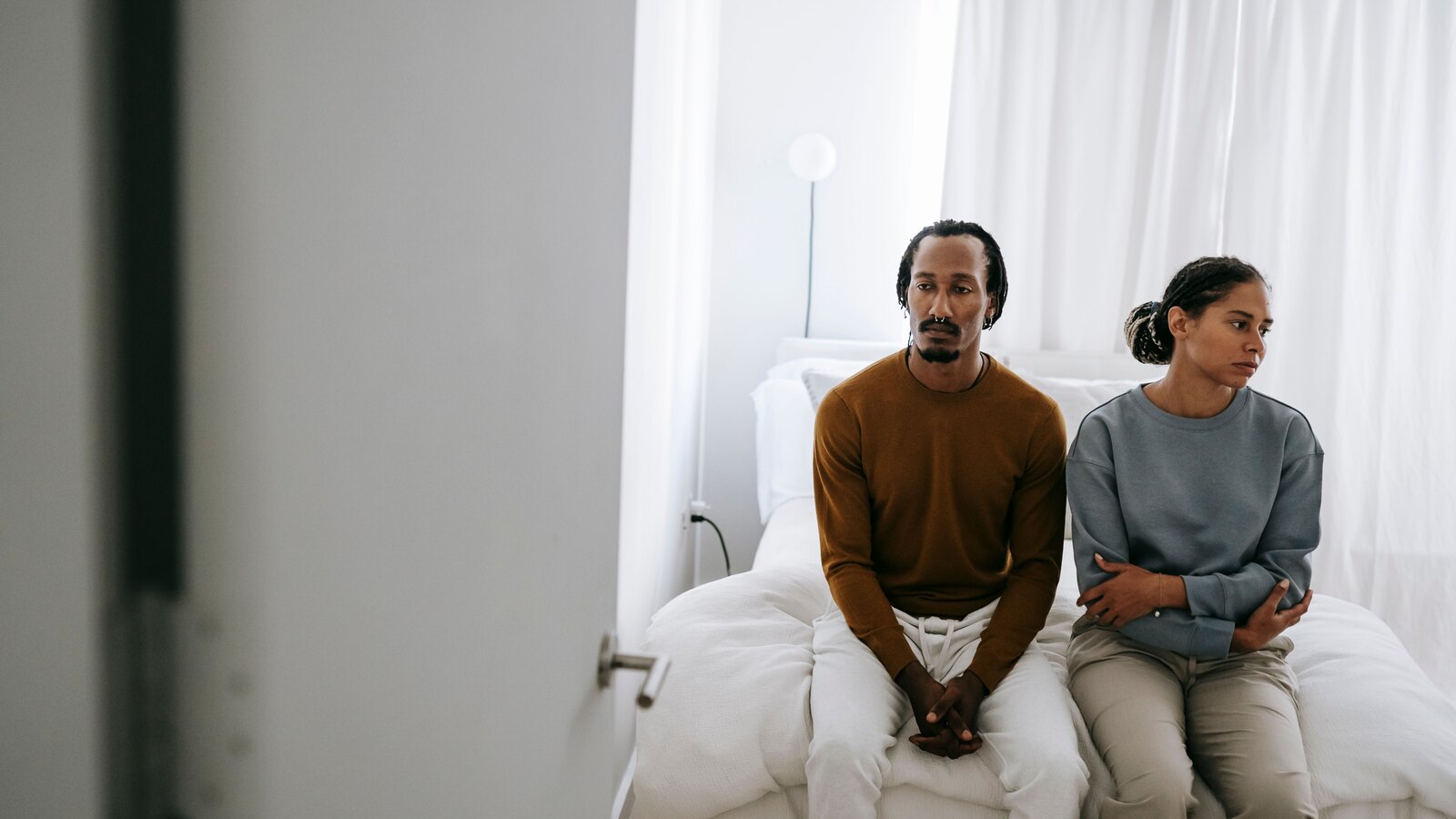
A study published in The Journal of Social Psychology this month asked 672 Polish adults in long-term relationships an uncomfortable question: would you rather your partner lied to you, or told you the truth? The finding that matters is not that people preferred kind lies to selfish ones; most of us could have guessed that. It is this: the less satisfied people were in their relationship, the more they preferred to be lied to, and the more they experienced blatant truth as harmful. Read that slowly. In struggling relationships, honesty itself has become something people cannot afford.
The researchers, Sebastian Wnęk and Katarzyna Cantarero, frame it through what is called the Theory of Resilience and Relational Load: supportive, validating interactions build up emotional reserves, and couples draw on those reserves when life applies pressure. A relationship with healthy reserves can metabolise a hard truth. A relationship running on empty experiences the same truth as one more threat arriving at a house already under siege. So the partners start asking, in a hundred small ways, for the softened version. Do not tell me what the evening cost. Do not tell me what you actually think. Tell me the version I can survive.
Here is the reversal I want to offer, because the easy reading of this study is that some people are simply too fragile for honesty. In my work I almost never meet that person. What I meet are women, mostly, who can handle any truth in any boardroom in the country, who negotiate, manage, absorb and deliver under pressure all day, and who come home to the one place where a straight sentence has become dangerous. The problem is not her capacity for truth. The problem is what truth costs in that specific house: the week of silence, the punishing mood, the argument that runs until 2am and resolves nothing, the way an honest answer gets stored and used later. People do not start preferring lies because they are weak. They start preferring lies because, in that relationship, the truth has been priced out of reach.
And that preference is one of the most useful diagnostic signals a couple can get, if they know how to read it. The researchers are careful to note their data cannot prove cause and effect, so let me be careful too. But clinically, the direction of travel is familiar. First, honesty becomes expensive. Then the couple quietly renegotiates: less truth, more peace, or what gets called peace. Then both people begin managing each other instead of knowing each other. She stops asking about the money. He stops asking about her day, because the answer might need something from him. They call the arrangement maturity, or choosing your battles, or just how long relationships are. What it actually is, is a slow trade of intimacy for quiet, and the exchange rate gets worse every year.
I want to be honest about the other side, because kindness and honesty genuinely do pull against each other sometimes, and the study confirms that most people judge a lie told to protect a partner less harshly than one told to protect the liar. There is a real difference between 'I told her the dinner was lovely because she needed the win' and 'I told her I was working late.' A relationship with no gentle fictions at all would be a hostile place. The line is not between couples who never soften anything and couples who do. The line is between softening chosen from strength, in a house where the truth is still available, and softening chosen from fear, in a house where it is not. Only one of those is a strategy. The other is a symptom.
Notice also what the preference does to the person holding it. The woman who no longer wants to know is not at peace. She is paying for the not-knowing with vigilance, because some part of her nervous system keeps track of every topic that has been quietly closed, every question she has stopped asking, every conversation she now steers around like furniture in the dark. That is exhausting in a way that is hard to name. It is also why, when the truth finally arrives, as it usually does, people say the shock was not the fact itself but the discovery of how long they had been managing around it.
So here is a practice, and it is quieter than 'communicate better.' This week, notice what you ask your partner to hide from you. Not the big betrayals; the small daily exemptions. The topics where you have silently agreed to accept the brochure version. Then ask yourself the harder question: what do I believe would happen if the honest version arrived? If the answer is a fight, a freeze-out, or a punishment, the issue to work on is not the content of any single truth. It is the cost of truth itself in your relationship, and that is exactly the kind of pattern that responds to skilled help, because it is a learned economy, and learned economies can be renegotiated. The goal is not brutal honesty everywhere. It is a house where the truth can visit without breaking anything.
Start by making one small truth cheap again. Offer it gently, receive it without an invoice attached, and watch what the relationship does with it. Couples do not rebuild honesty with a grand confession. They rebuild it the way they lost it: one ordinary Tuesday at a time.
This is a commentary, not clinical advice or a claim about any individual client. News links are starting points, not endorsements of every claim in the source stories.
Source: https://www.psypost.org/people-in-strained-relationships-show-somewhat-higher-preference-for-hearing-lies/
Share this post
Ready to talk about what you just read?
Book a free discovery call with Hakeem Lesolang. No pressure. No pitch. Just an honest conversation about where you are and where you want to be.
Book Your Free Discovery Call